New Construction Expertise. Smarter Negotiations. Better Value.
Buying New Construction? Don't Negotiate Alone.
Builder prices, incentives, financing offers, and upgrade packages can be more complicated than they appear. iNIAZ helps buyers evaluate the full deal, identify potential negotiation opportunities, and navigate the new construction purchase process with confidence.
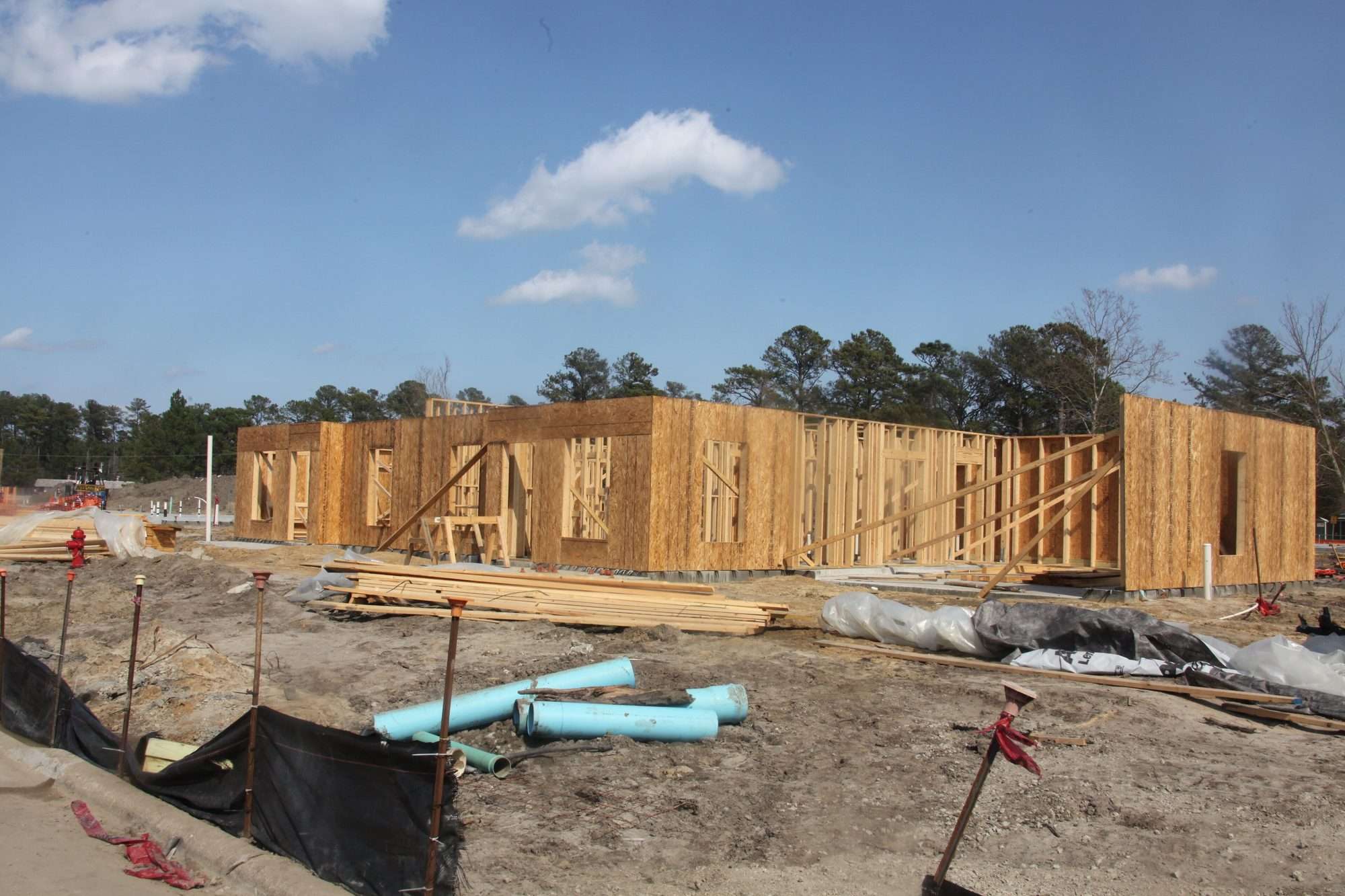
Illustrative photo, not an iNIAZ listing.
Representation
Why buyer representation matters
The friendly team in the model home is there to sell the builder's homes. You deserve someone on your side of the table, too.
The builder's sales representative
Works for the builder and represents the builder's interests: selling homes, upgrades and preferred financing at prices and terms that work for the builder. They can be helpful and knowledgeable, but they are not your advocate.
Your iNIAZ buyer representative
Works on your behalf within the agency relationship and buyer agreement you sign. We help you compare homes and communities, evaluate total costs and incentives, negotiate where there is room, and keep track of deadlines through construction and closing.
Talk with us before your first builder visit. Builder registration rules and broker compensation policies vary. Some builders require your agent to be registered on your first visit.
Talk to iNIAZ firstServices
What we help you negotiate
Help with every part of a builder's offer, not only the price on the sign.

Purchase Price Negotiation
- Evaluate the builder's asking price.
- Compare the builder's available inventory.
- Identify where there may be price flexibility.
- Review comparable new-home and resale prices nearby.

Builder Incentives
- Evaluate closing-cost credits.
- Review preferred-lender offers against outside lenders.
- Compare temporary and permanent rate buydowns.
- Weigh financing incentives against a lower price.

Upgrade Packages
- Review flooring, kitchen, bath, electrical, appliance and finish upgrades.
- Judge what each package is worth to you.
- Identify design-center credits that may be negotiable.
- Compare builder upgrade pricing with reasonable alternatives after closing.

Lot Premiums and Options
- Evaluate lot premiums.
- Review structural options such as extensions and finished basements.
- Consider how lots and options may affect resale.
- Compare total cost across the homes available to you.

Construction Contracts and Timelines
- Walk through the main contract and financial terms with you.
- Review deposits, upgrade payments, estimated completion timing and contingencies.
- Recommend a real estate attorney for legal interpretation where appropriate.
- Encourage independent inspections and due diligence at key stages.

Overall Deal Comparison
- Compare the base price with the final purchase price.
- Account for upgrades, lot premiums and options.
- Compare financing offers and incentives side by side.
- Estimate cash to close and monthly payments, judging overall value rather than an advertised discount.
Timing
When builders may be more flexible
Every builder and community is different. These are situations where there may be more room to negotiate, never guarantees.
- The builder has completed homes in inventory.
- A home has been available for some time.
- A community is approaching closeout.
- The builder is offering incentives on specific homes.
- The builder is working toward internal sales targets.
- Market conditions favor additional buyer incentives.
Buyer's guide
New construction, topic by topic
What to understand about each part of a builder's offer before you sign. General guidance only; every builder's terms differ.
Builder price negotiations
Builders often protect advertised base prices so earlier buyers in a community are not undercut. Room to negotiate, when there is any, more often shows up in lot premiums, upgrade allowances, closing-cost credits or financing incentives than in the base price.
- Compare the final contract price, not the starting price.
- Ask what has sold recently in the same community, and at what final price.
- Completed inventory homes and closeout phases tend to have more flexibility.
Builder financing incentives
Many builders tie incentives to their affiliated lender or title company. The incentive can be worth taking, but compare the lender's full cost: rate, points, fees and how long the rate lock lasts.
- Get a written Loan Estimate from at least one outside lender.
- Ask whether the incentive is lost if you use another lender.
- Check rate-lock length and extension costs against the build schedule.
Closing cost credits
A credit lowers the cash you bring to settlement but not the price, the loan amount or the payment. Credits are capped by your actual closing costs and by loan-program limits on seller contributions, so a large credit can go partly unused.
- Ask what happens to any unused credit.
- Use the comparison tool above to see how a credit compares with a price reduction.
Mortgage rate buydowns
A permanent buydown lowers the rate for the life of the loan; a temporary buydown (such as a 2-1) lowers it for the first years only, then the payment rises. Make sure you can afford the full payment, and compare the buydown with a price reduction of the same cost.
Lot premiums
Lots that back to open space, sit on a cul-de-sac or are larger often carry a premium. Ask what is planned next to the lot, whether the premium is negotiable, and how it might affect resale compared with similar homes on standard lots.
Structural upgrades
Options such as extended rooms, extra bedrooms, finished basements, higher ceilings or a larger garage have to be chosen before construction and are hard or impossible to add later. Prioritize them over finishes you can change after closing.
Design center selections
Flooring, cabinets, counters, fixtures and lighting are chosen at the design center, usually by a deadline, and often paid for with a non-refundable deposit. Get itemized prices, and compare them with what the same work would cost after closing.
Builder contract considerations
Builder contracts are written by the builder and usually differ from standard resale agreements. Have a real estate attorney review legal terms. We walk through the business terms with you.
- Deposits and upgrade payments: when they are due and when they become non-refundable.
- Estimated completion date, how it can change, and what you can do if it slips.
- Financing and appraisal contingencies, if any.
- Your right to independent inspections and the final walkthrough.
- Dispute resolution, such as arbitration requirements.
Pre-drywall and final inspections
Municipal inspections check code compliance; an independent inspector works for you. A pre-drywall inspection catches framing, wiring, plumbing and ductwork issues while they are visible, and a final inspection before settlement produces the punch list for the builder.
Construction delays
Weather, permits, labor and materials can move completion dates. Plan your lease, sale of your current home and rate lock around the possibility of delay, and know what the contract says about it.
Warranty coverage
Builder warranties usually cover workmanship, systems and structural elements for different lengths of time, and some are backed by a third-party warranty company. Get the warranty document before you sign, learn the claim process, and schedule an inspection before the first-year coverage ends.
Resale considerations
While a builder is still selling in a community, resale homes compete with new ones and their incentives. Lot location, structural options and finishes all affect later resale; we look at how comparable homes in similar communities have resold.
Guides in more depth
Construction timeline
From the first visit to the warranty period
- Before the first builder visitGet a pre-approval from a lender of your choice.
- Home, lot and contractCompare the full price, not the base price.
- Financing and rate lockCompare written Loan Estimates, including an outside lender.
- Design selectionsGet itemized pricing for every selection.
- ConstructionAsk for schedule updates in writing.
- Drywall and finishesConfirm the settlement date once the builder sets it.
- Walkthrough and settlementCompare the Closing Disclosure with your Loan Estimate.
- After closing: warranty periodSchedule an inspection before the first-year coverage ends.
Printable checklists
- Builder contract checklist13 items
- Construction inspection checklist9 items
- Financing and closing checklist9 items
The iNIAZ process
Buying new construction, step by step
Step 1: Understand your budget and goals
Price range, financing, must-haves and the move-in window you are working with.
Step 2: Identify builders and communities
Shortlist communities and home types that fit, before the first model-home visit.
Step 3: Compare properties, plans and total costs
Base price, lot premiums, options and upgrades, compared as full purchase prices.
Step 4: Evaluate and negotiate incentives
Price, credits, rate buydowns and upgrade allowances weighed against each other.
Step 5: Review contract and construction milestones
Deposits, selection deadlines, estimated completion dates and contingencies.
Step 6: Coordinate inspections, walkthroughs and closing
Independent inspections, the pre-settlement walkthrough, punch list and settlement.
Deal comparison
Compare builder offers
Enter up to four offers to see the effective purchase price, cash to close, monthly cost and total cost over the years you expect to own the home. A discount lowers the price; a credit lowers only what you bring to closing; a buydown lowers the rate.
Each input is tagged: Actual figures come from the builder's price sheet or the lender's Loan Estimate
- Source: Actuala figure from a document such as a price sheet, lease, tax bill or lender quote.
- Source: Assumptiona choice or judgment you make, such as down payment, vacancy or how long you hold.
- Source: Estimatean estimate of a cost or value, such as insurance, comparable rents or value after renovation.
Results are calculated from these inputs. They are estimates, not quotes, appraisals or advice.
Side by side
| Estimate | Builder A | Builder B |
|---|---|---|
| Base price | $550,000 | $575,000 |
| Lot premium | $15,000 | $0 |
| Total upgrade costStructural options plus design-center upgrades | $55,000 | $30,000 |
| Builder discount (price) | $0 | −$10,000 |
| Effective purchase price | $620,000 | $595,000 (lowest) |
| Loan amount | $558,000 | $535,500 |
| Discount points paid | $0 | $0 |
| Builder-funded rate buydownCost of the temporary buydown | $0 | $12,188 |
| Builder credits used at closingUp to closing costs, points and the lender limit | $14,000 | $5,000 |
| Estimated cash to closeDown payment, closing costs and points, less usable credits | $62,000 (lowest) | $68,500 |
| Estimated monthly costFull principal and interest, taxes, insurance, HOA and mortgage insurance | $4,477 | $4,385 (lowest) |
| Monthly cost in year oneLower only when there is a temporary buydown | $4,477 | $3,713 (lowest) |
| Out of pocket over 7 yearsCash to close plus every monthly payment | $438,063 | $424,629 |
| Loan balance after 7 years | $504,523 | $484,179 |
| Net cost of ownership over 7 yearsOut of pocket less the equity you hold at the purchase price; excludes appreciation and selling costs | $322,586 | $313,808 (lowest) |
| Value of builder incentivesDiscount, usable credits and buydown | $14,000 | $27,188 |
- Builder A: $1,000 of the credit may go unused (it exceeds closing costs and points, or the 6% limit including any buydown). Ask whether it can become a price reduction or upgrades instead.
- Builder B: the monthly payment rises by $671 after the buydown's first year and reaches the full amount in year 3. Lenders usually qualify you at the full payment.
How this is calculated
- Purchase priceBase price + lot premium + options + upgrades − builder discount
- $620,000
- Discount pointsLoan × points %
- $0
- Temporary buydown cost (builder-funded)Σ (full payment − reduced payment) × 12 for each buydown year
- $0
- Contribution limitPurchase price × 6% (conventional, at this loan-to-value)
- $37,200
- Builder credits appliedLowest of: credits offered, closing costs + points, limit − buydown cost
- $14,000
- Cash to closeDown payment + closing costs + points − credits applied
- $62,000
- Out of pocket over 7 yearsCash to close + payments made (net of buydown) + taxes, insurance, HOA, mortgage insurance
- $438,063
- Net cost of ownership over 7 yearsOut of pocket − (purchase price − loan balance)
- $322,586
The link holds only the figures in this tool, in the web address. Nothing is saved on our servers, and no name or contact details are included. See our privacy policy.
The figures shown are examples. Replace them with each builder's price sheet, incentive terms and your lender's Loan Estimate. Some incentives require the builder's affiliated lender. This is not a loan offer, an appraisal, or legal or tax advice, and no discount or concession is assured.
Estimates for information only, based on the figures you enter. This is not a loan offer, appraisal, or legal or tax advice.
Builder Offer Review
Have a builder's price sheet? Let us review it.
Send us what the builder has offered. We review it with you, show the full cost side by side with any alternatives, and list the questions to ask before you sign. No cost and no obligation.
What we review
- Base price, lot premium, options and upgrades, added up to a final contract price.
- Incentives: what they are worth, what they require, and whether they can be used.
- Price, credit and buydown alternatives compared on cash to close and monthly payment.
- Deposits, upgrade payments and when each becomes non-refundable.
- Completion date language, inspection rights and warranty terms to ask about.
- Recent sales and resale homes nearby, for context on value.
A business review, not legal advice. We recommend a real estate attorney for contract interpretation. If you have already registered with the builder or signed an agreement, tell us; it affects how we can help.
Full review workflow and privacy detailsBuilders and communities
Find builders and new construction communities
New homes across the Main Line, Chester and Delaware counties and the Philadelphia suburbs.
Builder guides
Independent guides: company facts with sources, and what to ask each builder. iNIAZ is not affiliated with or endorsed by any builder.
Community profiles are on the way
We publish builder and community details only after confirming them: location, home types, floor plans and, when the builder publishes one, a dated starting price. In the meantime, tell us where you would like to live and your budget, and we will research current communities and builders for you.
Consultation
Common questions
Do I need my own agent if the builder has a sales office?
The builder's sales representatives work for the builder. A buyer representative works on your behalf under a written buyer agreement, helping you compare homes, total costs and incentives, and keeping your interests in view through construction and closing.
Why contact iNIAZ before visiting a builder?
Many builders ask buyers to register their agent on the first visit or the first registration form, and some will not work with an agent introduced later. Policies on registration and broker compensation vary by builder, so it is best to talk with us first.
Will a builder lower the price of a new home?
Sometimes, but not always. Some builders protect their base prices and prefer to offer closing-cost credits, rate buydowns or upgrade allowances instead. We help you evaluate the whole offer, and we never promise a specific discount.
Should I use the builder’s preferred lender?
Preferred-lender incentives can be valuable, but compare the total cost: rate, fees and points, as well as the incentive. Get a written quote from at least one outside lender so you can compare offers side by side.
Do new construction homes need an inspection?
We recommend independent inspections, typically before drywall goes up and again before settlement, even when the home has municipal inspections and a builder warranty. Check what your contract allows. Read our guide to buying new construction for more detail.
More detail in our guide: Buying a New Construction Home: Contracts, Inspections and Warranties.
iNIAZ
Considering a new home from a builder?
Talk with iNIAZ before you sign anything. No cost to ask, and no obligation.